



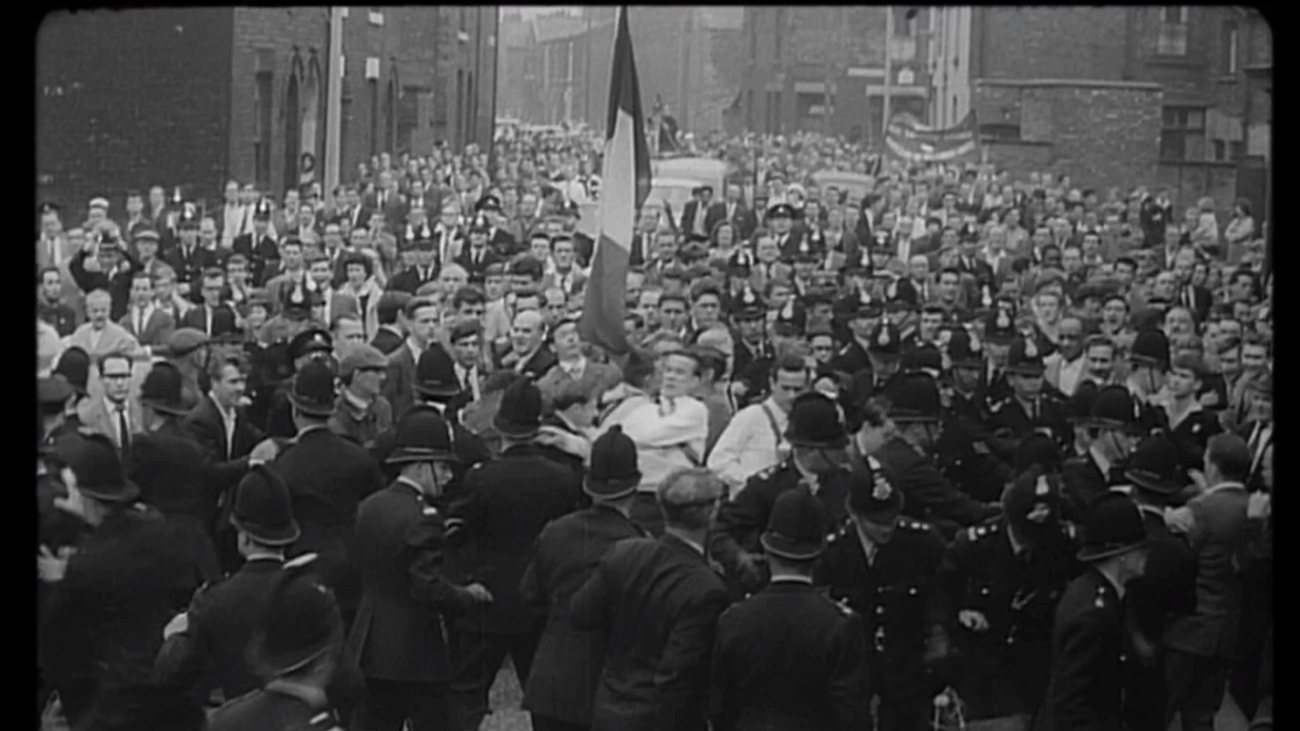
Sixty years ago, on 8 December 1965, the first Race Relations Act declared that no one should be treated less favourably because of the colour of their skin, or the country of their birth. It was the beginning of a legislative journey that many hoped would end racial discrimination for good.
Yet, sixty years on, the uncomfortable truth is that the promise remains unfulfilled. Laws have changed, whilst hearts and minds too often have not. The data speaks for itself, Black Britons are still more likely to be stopped and searched, less likely to be hired or promoted, and more likely to be mistreated by the systems that claim to serve and protect. From the classroom to the courtroom, from newsrooms to neighbourhoods, the insidious nature of conscious bias means racism persists. Sometimes in the open, sometimes disguised in polite words and hidden assumptions.
This anniversary is not just a milestone, it’s a mirror. It forces us to ask – what good is a law if the behaviour it was designed to change remains stubbornly the same? How do we move from legislation to liberation, from token equality to true equity? As we mark sixty years since the Race Relations Act, we must confront the truth – it is not enough to outlaw racism, we must unlearn it.
Explore our Race Relations Act campaign.
The 1965 Race Relations Act was historic, but its reach was narrow. The Act made racial discrimination in public places illegal, but there were no protections over employment, housing, or policing.
At the time, overt acts of racism were common – “No Blacks, No Dogs, No Irish” was meant literally, with signs pinned to windows and doors. The ‘White Defence League’ morphed into the first ‘British National Party’, which then became ‘National Front’. The 1964 general election saw slogans like, “if you want a n***** for a neighbour, vote Labour”, and “Dont vote – A vote for Tory, Labour or Liberal is a vote for more blacks!”. These sentiments came with a co-sign from Members of Parliament – “I should think that is a manifestation of the popular feeling. [-] I fully understand the feelings of the people who say it. I would say it is exasperation, not fascism.” said Conservative MP Peter Griffins – while Enoch Powell’s infamous “Rivers of Blood” speech came with 82% of the British public’s support.
Unsurprisingly, these thoughts and feelings were not only announced through national media, they were apparent in systematic and everyday behaviours. Despite the Act, Black children continued to be disproportionately labeled as “educationally subnormal” and treated as such. Establishments still refused to serve non-White customers in line with the colour bar. Violent attacks on Black communities and individuals remained rife, usually without reprimand.
It was clear both then, and now, that the law marked a symbolic step forward, however did very little to change attitudes and behaviours. The continued indignities experienced in public, and in private, were proof that legislation alone could not uproot Britain’s entrenched prejudice.
The Race Relations Act has undergone several amendments between 1965 to the early 2000s, expanding its protections to housing, employment and improved policing. The Act now also places statutory duties on public bodies to actively promote race equality. All significant strides, but implementation is weak. The 1981 Scarman Report highlighted clear misuses of police power against Black communities, acknowledging the existence of racial disadvantage. Following the murder of Stephen Lawrence, ‘Institutional racism’ became a term popularised by the 1999 Macpherson Report, but was largely ignored. An official review of the Child Q incident found that racism was “likely to have been an influencing factor” in the decision to strip search a 15-year-old Black girl at school. Not to mention, the Windrush scandal, the Grenfell Tower Fire, and the questionable deaths of Black people in police custody.
The legal structures are in place, grave misconduct is evidenced, but enforcement is passive.
The law changed, but we didn’t, and then the law was amended, but we weren’t. Statistics still paint a grim picture. Black graduates are less likely to be employed than white peers with identical qualifications. Black people are nearly seven times more likely to be stopped and searched, and Black Caribbean children are over three times more likely to be permanently excluded from school.
There are also the day to day aggressions, like being followed around a shop, walking into a salon to be told “I’m not sure we have anything that matches your skin tone”, or “I’ve never done your type of hair before” – meaning they can’t, and they won’t. The promising job interview that “just didn’t quite feel like the right fit for us”, but no constructive feedback. These moments don’t make the headlines, but they chip away at faith, dignity and belonging – and are telling of the attitudes and mindsets that surround us.
In other areas of life, policy and law have brought major cultural shifts. We buckle seatbelts without thinking. Most people wouldn’t light up a cigarette in a restaurant these days, and many of us now instinctively separate our plastics from the trash. Attitude and behaviour change is more than achievable, policy and law can be extremely effective. Yet six decades on, the pay gap for Black professionals begins at their first graduate job. Black men are 7 times more likely to die following police restraint. Black Women are almost 4 times more likely to die during child birth. Why has this particular change been so stubborn?
There is a longstanding narrative that racism is mostly unconscious, and that prejudice lies in innocent presumptions. Explicit racial bias however is alarmingly present, and sometimes it’s as conscious as it gets. Think about the racist abuse aimed at Black footballers after the 2021 Euros, or the Tory donor who felt as though Diane Abbott needed to be shot, and was comfortable saying so.
These are not unconscious, innocent, accidents. They are conscious expressions of racism, often enabled by a society that fails to hold perpetrators accountable. As Professor Kehinde Andrews argues, “Britain’s problem is not that it’s racist by accident, it’s racist by design”.
Unlike our thoughts around recycling, smoking indoors, and car safety, attitudes towards race are embedded into our identity from as young as 2 years old. Ideas about race are then shaped and reinforced by the societal norms around us. The ‘us vs them’ mentality is strong, and periods of insecurity come with blame, phobia and subsequent hostility towards ‘them’ – the groups classed as ‘other’.
There is an understanding that racism is wrong, it’s illegal, but that’s not enough. Rather than racism being deterred, it morphs, becoming insidious – hidden in machiavellianism. Moral licensing is just one of the loopholes used by individuals and institutions alike. It’s the belief that doing a seemingly anti-racist act such as; appointing a Black leader as the face of an agenda, or commissioning an EDI initiative – absolves them from real, ongoing behavior change and accountability. It’s the very conscious, institutional version of, “My best friend is Black, how can I be racist?” [proceeds to be racist]. These behaviours go unchecked, allowing modern variants of racism to thrive.
Sixty years on, the Race Relations Act remains a landmark – but it should not be a resting place. The work ahead requires more than performative gestures and diversity checklists. It demands a cultural shift where anti-racism is embedded into education, media, healthcare, and justice systems, rather than a charitable add on, a Black square, or an afterthought.
Community leadership would be a great start, ensuring Black communities are not just consulted, but centred in decision-making on issues that affect them. More accountability, with race equity impact assessments mandated as part of public policy, and meaningful consequences for institutional racism. Targeted behavioural insight, recognising and addressing the psychological and cultural forces that uphold conscious bias, identifying ways to counteract it, and implementing those findings nationally.
The 60th anniversary of the Race Relations Act offers us more than a moment to look back, it gives us a mandate to move forward. This is not just about the laws that have been broken, it’s about the lives that have been broken along with it. The irreparable damage that many of us still feel today. The notion that much of this damage was, and still is, preventable by the state is a gross insult to injury.
As we remember the promise made in 1965, let’s renew it, not only with policy, but with purpose – understanding that the unlearning of racism is not a burdensome act of charity, it is an act of peace and justice for all.
By Guest Writer, Christina Webley